
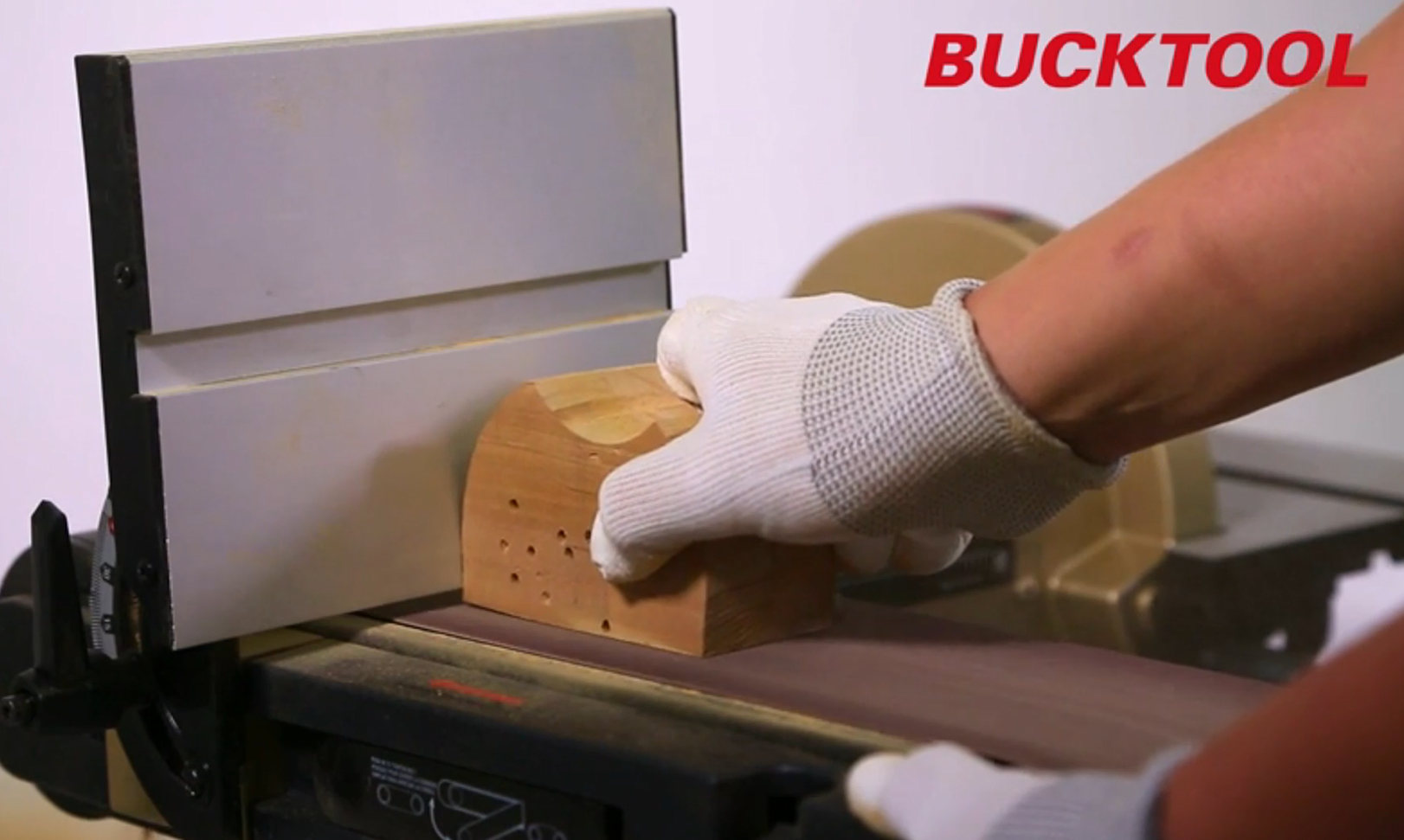
Belt sanders, as a common grinding and polishing device, are widely used in various industries. They can be categorized by shape, structure, and size into handheld belt sanders, benchtop belt sanders, and vertical belt sanders, etc. However, regardless of the type, a belt sander generally requires the following three basic structural elements:
1. Belt Sander Drive Mechanism
This refers to the mechanism that drives the abrasive belt. It typically includes a pneumatic motor or electric motor providing power, and one or more drive pulleys to rotate the abrasive belt.
2. Belt Sander Tensioning Mechanism
The abrasive belt must have appropriate tension to operate stably. Therefore, a belt sander must have a mechanism to tension the belt. Single-wheel belt sanders achieve tension through the dimensional fit between the abrasive belt and the wheel's outer diameter, as well as the centrifugal force during wheel rotation; this method is less commonly used nowadays. Most belt sanders have two or more drive pulleys, and belt tension is achieved by changing the position of one of these pulleys. The position of the tensioning wheel generally changes through three main methods: bolt pressing, spring tensioning, and cylinder tensioning, with spring and cylinder tensioning being the most commonly used.
3. Belt Sander's Adjustment Mechanism
Belt sanders typically require a belt alignment mechanism to correct and adjust the belt's deviation during operation, achieving stable and good working results. The principle behind this is to change the angle of one or more drive wheels to adjust the belt's position during operation. The most common method is screw alignment, while some automated models use alignment motors or sensors for automatic alignment.