
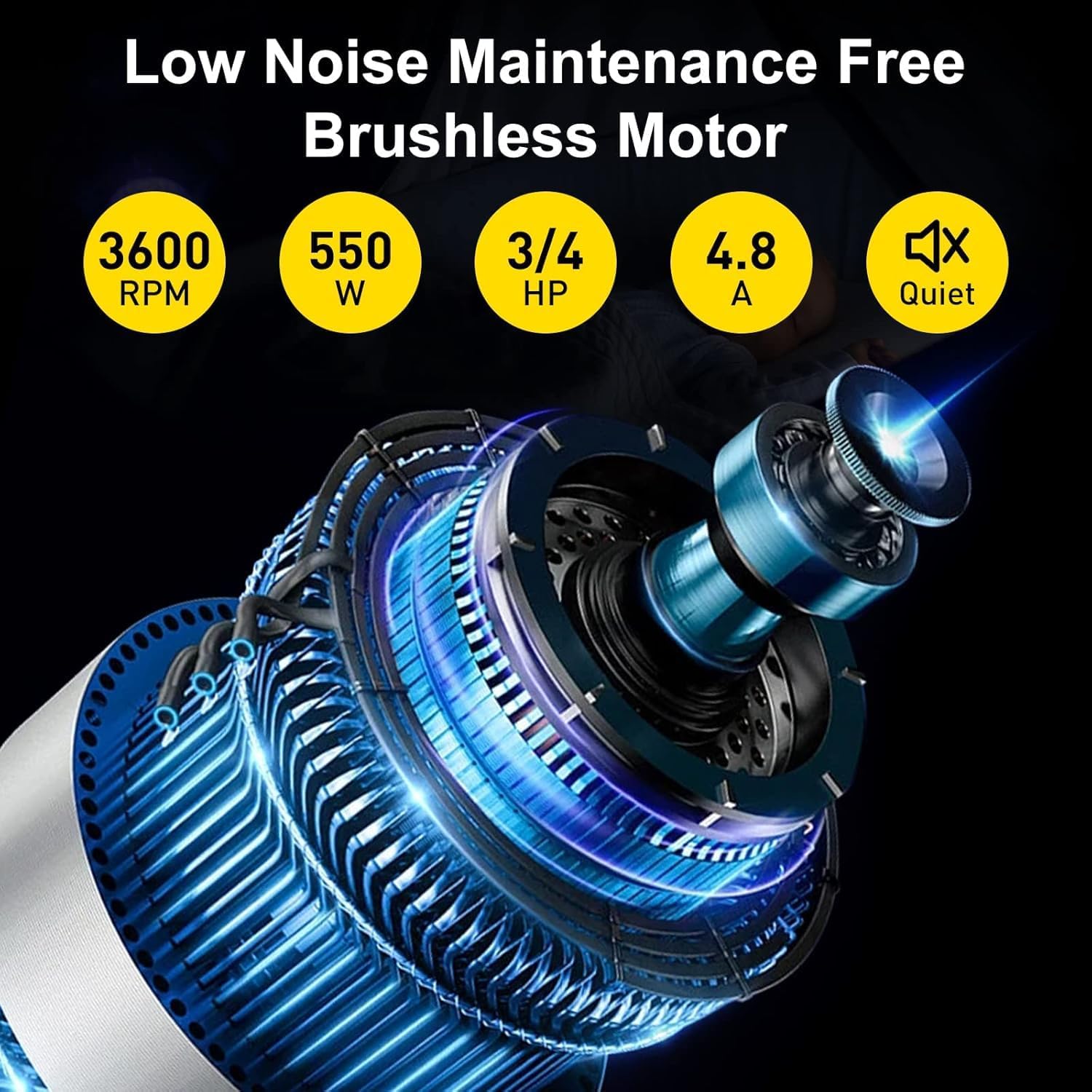
Modern power tools are becoming more powerful, compact, and efficient than ever before. One of the biggest reasons behind this evolution is the advancement of motor technology. Today, users often come across two common motor types in tools and workshop machines: brushed motors and brushless motors.
But what exactly is the difference between them, and which one is the better choice for your workshop?
At BUCKTOOL, we believe understanding motor technology helps users choose the right tool for their needs. In this article, we’ll explain how brushed and brushless motors work, along with their advantages, disadvantages, and ideal applications.
Understanding Motor Basics
Most electric motors contain two main parts:
- Rotor – the rotating component
- Stator – the stationary component
The motor works by using electromagnetic fields to create rotation. The main difference between brushed and brushless motors lies in how electricity is delivered inside the motor.
What Is a Brushed Motor?
A brushed motor uses carbon brushes that physically contact the motor’s commutator to transfer electricity. As electricity flows through the brushes, the motor rotates.
These motors have been widely used in power tools for many years because of their simplicity and affordability.
Advantages of Brushed Motors
Lower Cost
Brushed motors are generally less expensive to manufacture, making tools more affordable.
Simple Speed Control
Speed can often be controlled simply by adjusting voltage.
Proven Technology
Brushed motors are durable and widely used in many traditional workshop tools.
Disadvantages of Brushed Motors
- Brushes wear down over time
- More maintenance required
- Higher operating noise
- More heat generation
- Lower efficiency compared to brushless motors
What Is a Brushless Motor?
A brushless motor (BLDC motor) eliminates physical brushes entirely. Instead, electronic controllers manage the flow of electricity to keep the motor spinning.
Because there is no friction from brushes, brushless motors are more efficient and require far less maintenance.
Advantages of Brushless Motors
Higher Efficiency
Brushless motors waste less energy and deliver more usable power.
Longer Lifespan
Without brushes wearing out, these motors last significantly longer.
Lower Maintenance
No brush replacement is needed.
Cooler & Quieter Operation
Reduced friction means less heat and lower noise levels.
More Compact Power
Brushless motors can provide more power in a smaller size.
Disadvantages of Brushless Motors
- More expensive than brushed motors
- Require advanced electronic control systems
- Slightly more complex design
| Feature | Brushed Motor | Brushless Motor |
|---|---|---|
| Cost | Lower | Higher |
| Maintenance | Requires brush replacement | Virtually maintenance-free |
| Noise | Louder | Quieter |
| Efficiency | Lower | Higher |
| Heat Generation | More heat | Runs cooler |
| Lifespan | Shorter | Longer |
| Power Density | Larger for same power | More compact |
| Performance | Good | Excellent |
Which Motor Is Better for Power Tools?
The answer depends on your application and budget.
Choose Brushed Motors If:
- You want lower-cost tools
- You use tools occasionally
- Simple applications are sufficient
Choose Brushless Motors If:
- You need higher efficiency
- You want longer tool life
- You prefer lower maintenance
- You use tools frequently or professionally
In most professional and high-performance applications, brushless motors are becoming the preferred choice.
How BUCKTOOL Uses Advanced Motor Technology
At BUCKTOOL, we continuously focus on delivering powerful, reliable, and efficient workshop tools. Many modern BUCKTOOL machines now feature advanced motor systems designed to improve:
- Performance
- Durability
- Energy efficiency
- User comfort
- Long-term reliability
Whether it’s bench grinders, belt sanders, scroll saws, or woodworking machinery, choosing the right motor technology helps maximize productivity and precision.